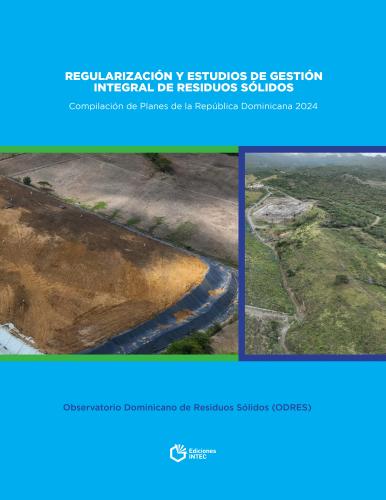

Regulation and studies of integrated solid waste management: Compilation of plans for the Dominican Republic 2024
Keywords:
Solid waste, Waste management, Recycling and valorization, Environmental assessment, Municipalities, Dominican RepublicSynopsis
This work presents a diagnostic analysis of solid waste generation and composition across several municipalities in the Dominican Republic, revealing territorial differences related to consumption patterns, population density, economic activities, and urban dynamics. The study shows that per capita waste generation ranges between 0.67 and 1.10 kg per inhabitant per day, with notable variations among municipalities. The findings also indicate that the majority of waste corresponds to recoverable fractions, particularly organic and recyclable materials, highlighting a strong potential for recycling, composting, and waste valorization strategies.
The study further examines waste composition across residential, commercial, and institutional sectors, identifying the predominance of recyclable materials such as plastic, cardboard, and glass, as well as the relevance of organic waste in residential and tourism-related areas. In addition, the analysis reviews the estimated daily waste loads received by landfills across the country, revealing significant concentrations in certain municipalities and emphasizing the need for evidence-based, differentiated waste management approaches that strengthen waste reduction, recovery, recycling, and safe disposal practices.